How to plan a trip itinerary you'll actually enjoy
There's a particular kind of holiday that leaves you needing a holiday: the over-planned one, where every hour is spoken for and you spend the trip racing your own schedule. A good itinerary isn't a tighter plan — it's a wiser one.
Planning is genuinely worth doing; the happiest trips usually have some shape to them. But the aim is a frame, not a cage. Here's how to build one that carries you through the days without dragging you along behind it.
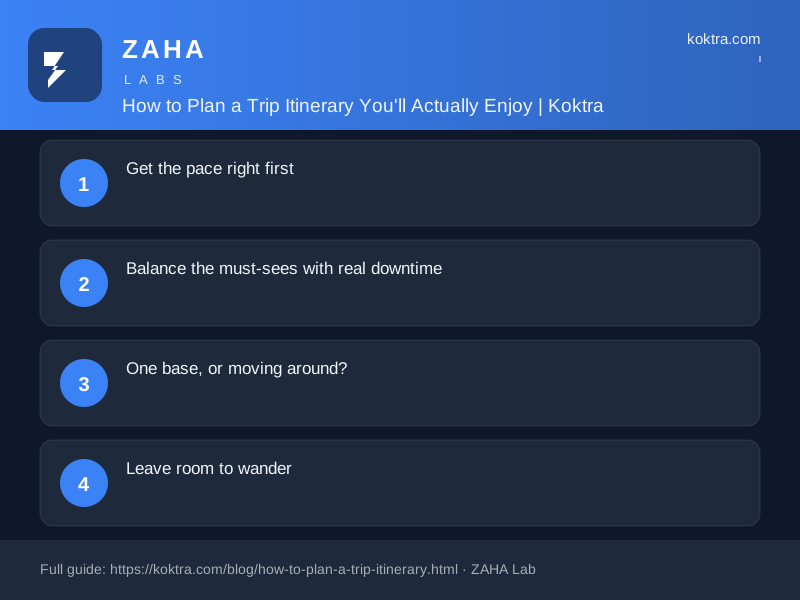
Get the pace right first
Before you slot in a single activity, decide on the tempo of the trip. Are you after a restful holiday with a few highlights, or an ambitious exploration where you're happy to be busy? Most people, if honest, sit somewhere in the gentle-to-moderate range — and most itineraries are planned as if everyone's a marathon runner.
A reliable instinct: plan for fewer things than you think you can fit. Travel days run slower than home days. Things take longer, you'll want to linger, and the unexpected good stuff — the market you stumble on, the conversation that turns into lunch — needs space to happen. Underfill the schedule and the trip fills itself in the best way.
Balance the must-sees with real downtime
Make a short list of the things that would genuinely disappoint you to miss — and keep it short. Those are your anchors. Everything else is optional, and downtime is not wasted time; it's often where the holiday actually happens.
- Pick one or two anchors per day, not five. A single highlight plus space to wander beats a forced march between sights.
- Protect a slow morning or a free afternoon. Blank space in the plan is a feature, not a gap to fill.
- Cluster by area. Group things that are near each other on the same day so you're not crossing town repeatedly.
- Leave the last day light. Travel home is tiring enough without cramming a dawn excursion before the airport.
One base, or moving around?
This is one of the biggest decisions, and it's worth making deliberately rather than by accident. Staying in one base and taking day trips means you unpack once, settle into a neighbourhood, and trade some breadth for depth and ease — wonderful for a shorter trip or anyone who finds constant repacking draining. Moving around lets you see more variety and cover ground, at the cost of more logistics, more half-days lost to transit, and less of that settled feeling.
A good middle path is to limit the number of stops and give each a few nights. Two or three bases over a week usually beats five; you spend your time being somewhere rather than getting somewhere. As a rule, the shorter the trip, the more a single base pays off.
Leave room to wander
Here's the part most itineraries forget. The moments people remember rarely come from the plan — they come from the gaps in it. The unplanned detour, the café you weren't looking for, the afternoon you decided to do nothing at all. If every hour is booked, there's no room for any of that, and you've quietly designed serendipity out of your own holiday.
So build the frame, then leave it deliberately incomplete. Keep a loose list of "if we feel like it" ideas rather than fixed bookings, and let your mood on the day decide. The plan is there to stop you wasting time, not to spend it for you.
All of this gets easier when the destination genuinely suits the trip you want in the first place — which is where our guide on how to choose a destination comes in. Get the where and the when right, and the itinerary almost plans itself.