How to travel well and avoid the crowds
Crowds rarely ruin a place; they just hide it. The same square that feels like a scrum at noon can be magical at dawn. Travelling well isn't about finding somewhere no one's heard of — it's about being somewhere at the right moment.
The good news is that crowds are surprisingly predictable. They follow seasons, days of the week and even hours of the day. Once you understand the pattern, you can simply step around it — often at the very same destinations everyone else is queuing for.
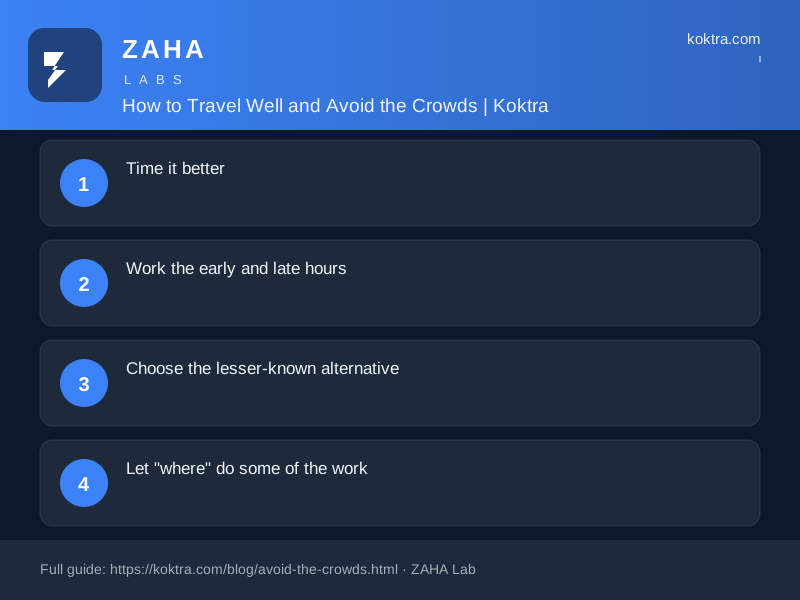
Time it better
The single biggest lever is when you go. Peak season concentrates everyone into the same few weeks, so shifting your dates even slightly can change the whole feel of a trip. The shoulder weeks either side of peak tend to offer similar conditions with a fraction of the people — we make the full case for that in why shoulder season is the sweet spot. And within any week, midweek is usually calmer than the weekend at city destinations, while popular spots near big cities can flip the other way as locals arrive on Saturdays. A little thought about both the season and the day pays off enormously.
Work the early and late hours
Even in high season, crowds keep banker's hours. The famous sights are heaving from late morning to mid-afternoon and noticeably quieter at the edges of the day. Lean into that:
- Go early. Arriving as a major site opens — or simply wandering a town at first light — can mean having a place that's mobbed by lunchtime almost to yourself.
- Stay late. Late afternoon and early evening empty out as day-trippers leave; the light is often lovelier, too.
- Flip the famous and the everyday. See the headline attractions at quiet hours, and use the busy midday for lunch, a rest, or a low-key neighbourhood the crowds ignore.
Choose the lesser-known alternative
For almost every overrun destination, there's a quieter cousin nearby that offers much of the same character without the crush. The next coastal town along, the second city instead of the capital, the valley beside the one everyone photographs. You rarely sacrifice as much as you'd fear — and you often gain something more genuine, since these places haven't reshaped themselves entirely around visitors.
This is partly a research habit. When you spot a famous, busy name, pause and ask what's near it that scratches the same itch. As ideas to look into rather than recommendations: travellers wanting Mediterranean charm without the crush sometimes trade the headline island or honeypot town for a quieter neighbour along the same coast; city lovers swap the most-visited capital for an underrated second city. Treat each as a thread to research for your dates and nationality, not a guarantee.
Let "where" do some of the work
Finally, crowd-avoidance starts before you even leave, at the choosing stage. A destination that's a quiet delight in one month is a bottleneck in another, so picking the place and the timing together is half the battle. Our guide on how to choose a destination walks through letting the season narrow your options — and if you'd like a shortlist of ideas tuned to a calmer time of year, the Trip Style Finder is built to suggest exactly that.
None of this requires insider secrets. It's mostly the discipline of going a little against the grain — earlier, quieter, one town over — and being rewarded with the version of a place that the crowds never get to see.